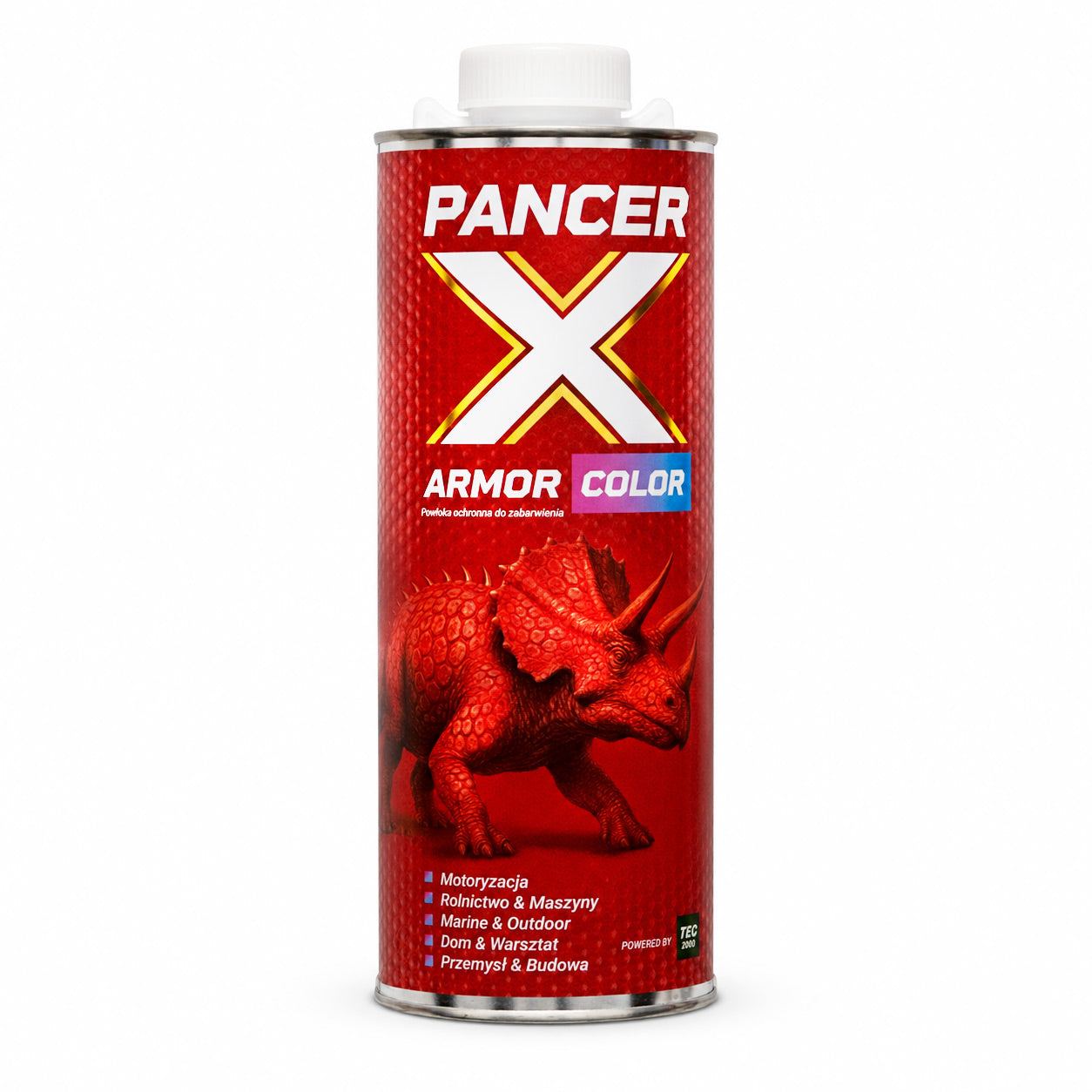
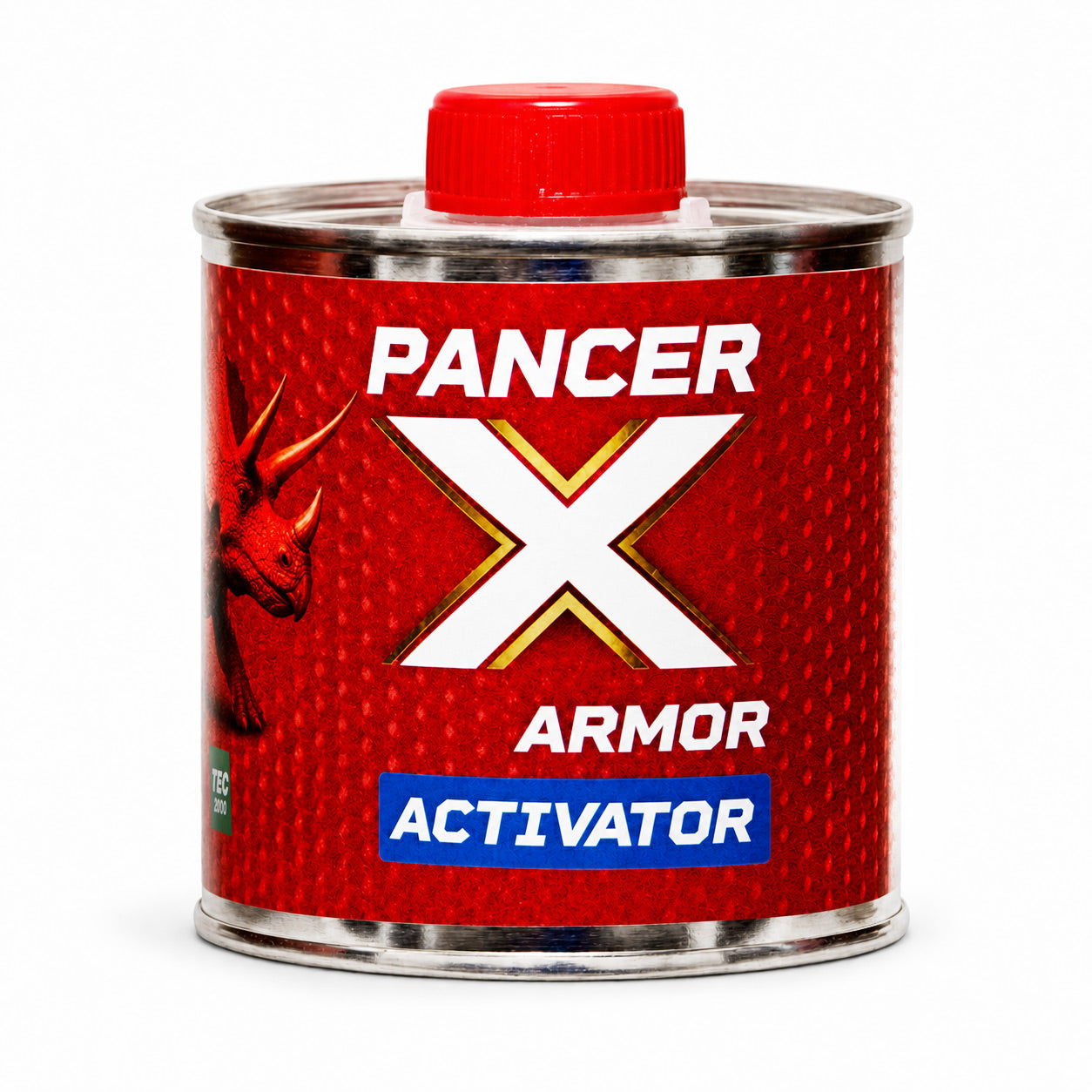
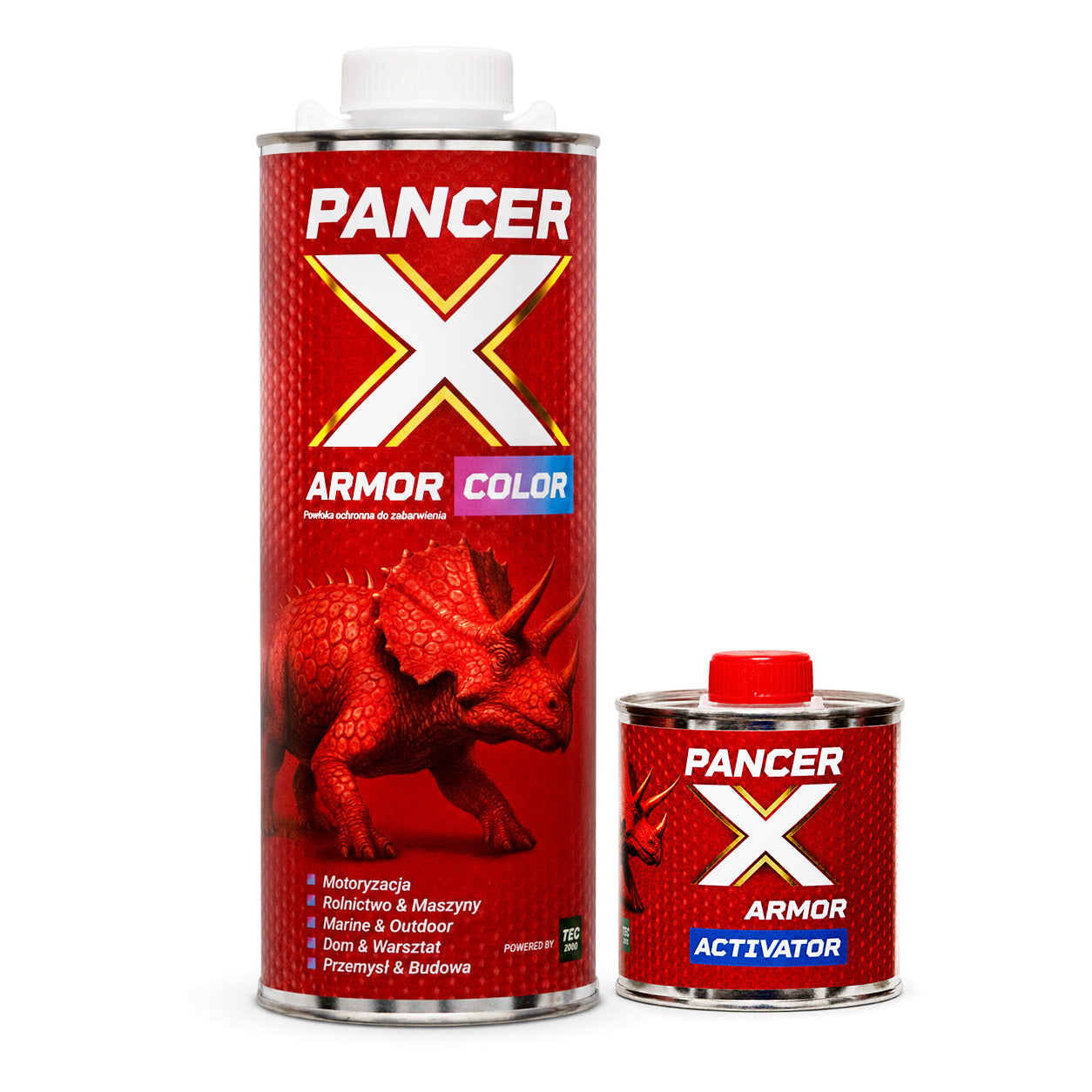
PANCERX ARMOR COLOR - tintable 2K protective coating (600 ml kit + Activator 200 ml)

SKU: PX_SET_C
EAN: 5904100073054
EAN (hardener): 5904100073009

Colour: Pick a colour from the RAL palette
Can't find your colour in the palette? We will match the closest shade to the paint you specify - if anything is unclear, we will confirm it with you before we start.

Colour swatches are for reference only - the actual RAL shade may differ from what you see on screen.

Accepted payment methods

ARMOR COLOR is a base, not a finished colour. This is the tintable version of the PANCERX two-component (2K) polyurethane protective coating. The pigment comes in the kit. You stir it into the base, add the hardener, and the coating goes on in whatever RAL shade you picked. BLACK you open and lay on. This one you make first, and that is the whole difference in how you use them.

The kit, and what the pigment is for

  • ARMOR COLOR base 600 ml: untinted, waiting for your shade.
  • Pigment: in the RAL colour you chose when you ordered. 10 to 15 percent of the base, so 60 to 90 ml goes in.
  • ACTIVATOR 200 ml: the hardener. 3 parts base to 1 part hardener, by volume.

Tinting: pigment first, hardener second

Pour the pigment into the base before the ACTIVATOR goes anywhere near the tin. Ten percent is usually enough, fifteen is the ceiling and not a target. Stir until there are no streaks, then add the hardener. From the moment those two meet you have roughly an hour of working time, so tint first and have the surface cleaned, degreased and keyed before you start. What comes out is a grainy, semi-matt finish in your colour instead of black.

From tin to finished panel: 4 steps

1
TINT
Pigment into the 600 ml base. 60 to 90 ml, which is 10 to 15 percent.
2
STIR
Work the colour through the base until it is even. No streaks, no lumps.
3
ACTIVATE
Now the ACTIVATOR 200 ml. Close the tin and shake it for 10-15 seconds. Pot life starts here: about an hour.
4
LAY IT ON
Roller, brush or spray gun. 2-3 thin coats, 30-60 minutes between them.
The nozzle sets the grain: 4 mm coarse, 2.5 mm medium, 1.4-1.8 mm fine. Nozzles, ratios and drying times →

Clean, degrease and key the surface before anything else. Order matters: pigment into the base first, ACTIVATOR last, never the other way round. Video instructions sit behind the QR code on the tin label.

What the pigment changes, and what it does not

  • 15 percent is the ceiling: that is the limit the base is built around. Go over it and you are outside the specification.
  • RAL, not "close enough": one machine, a whole fleet, a trailer, a gate, a roll cage. You pick the shade off the palette instead of taking what the tin gives you.
  • Scratches, stone chips, grit: the grain takes the beating that strips an ordinary coating off a sill.
  • Petrol, oil, water, road salt, UV: it does not crack, peel or fade in the weather.
  • Two components, cross-linked: polyurethane that cures chemically. A 1K aerosol only dries.
  • Quiet, and you can paint over it: it dampens panel noise, and since there is no asphalt or bitumen in it, acrylic paint goes over the top from 3 hours on.

Where a colour beats black

  • Cars, vans, pickups: a load bed, sills and arches in body colour rather than the usual black.
  • Farm and site machinery: hitches, ploughs, trailers and tipper bodies back in the maker's shade after a repair.
  • Boats and boat trailers: hardware that lives in water and salt, finished to match the hull.
  • Gates, stairs, tool chests: a hard, anti-slip surface at home that fits the rest of the place.
  • Steel structures and floors: safety colours, bay markings, plant that has to be seen from across the shop floor.

Questions about tinting

How much pigment goes in, which primer colour to use under a light shade, how long the tinted mix stays workable, what you can put it on. Answers are on one page. Read the FAQ →

The numbers, short version

3 to 1 by volume. 4.5 m2 per litre at a 100 micrometre dry film. Work between plus 10 and plus 30 degrees Celsius with humidity under 80 percent. Touch dry in 1-2 h, full resistance after 5-7 days. Everything else, including nozzle settings, is on a separate page. All the technical data →

PANCERX makes protective chemicals, together with an automotive YouTuber. We would rather hand you a number than an adjective. Made in Poland.

Not for the engine or the exhaust system, and never over one-component (1K) products. Once it has cured, do not dry sand it: ARMOR COLOR contains titanium dioxide and that dust is inhalable. Numbers here are guidance, the technical data sheet is the reference.

Danger. Contains xylene. The Activator contains isocyanates. H225 Highly flammable liquid and vapour. H315 Causes skin irritation. H412 Harmful to aquatic life with long lasting effects. Activator: H226 Flammable liquid and vapour. H332 Harmful if inhaled. H315 Causes skin irritation. H317 May cause an allergic skin reaction. H335 May cause respiratory irritation. EUH204 Contains isocyanates. May produce an allergic reaction. P210 Keep away from heat, hot surfaces, sparks, open flames and other ignition sources. No smoking. P261 Avoid breathing vapour or spray. P271 Use only outdoors or in a well ventilated area. P280 Wear protective gloves, protective clothing and eye or face protection. P312 Call a POISON CENTRE or doctor if you feel unwell. Safety data sheet (PDF) Activator safety data sheet (PDF). Safety data sheets are provided in Polish.

Product reviews

Photos straight from customers. Cars coated with PANCERX ARMOR.

Store
🚗
Škoda FabiaARMOR COLOR · yellow

The whole Fabia in ARMOR COLOR

Review: Škoda Fabia

The entire body done in PANCERX ARMOR COLOR.
Store
🚗
VW PassatARMOR COLOR · matt green

Matt military green

Review: VW Passat

The Passat all over in PANCERX ARMOR COLOR.

Store
🚗
VW BoraARMOR COLOR · before / after

Before and after

Review: VW Bora

From silver to yellow. That is how the PANCERX ARMOR COLOR coating came out.